Online learning is becoming a must-have for companies that want to stay ahead of the curve. With everything going digital, old-school employee training just isn’t cutting it anymore. Companies are switching to distance learning because it’s flexible, easy to access, and can be tailored to each employee’s needs. This helps employees grow and helps the company succeed.
eLearning has also proven to be a very effective component of custom corporate training programs. When designed to fit employees’ specific needs, it can work wonders in enhancing skills and performance.
Also read: Why Custom Corporate Training Programs Are More Impactful
But what exactly is eLearning, and why is it gaining so much popularity?
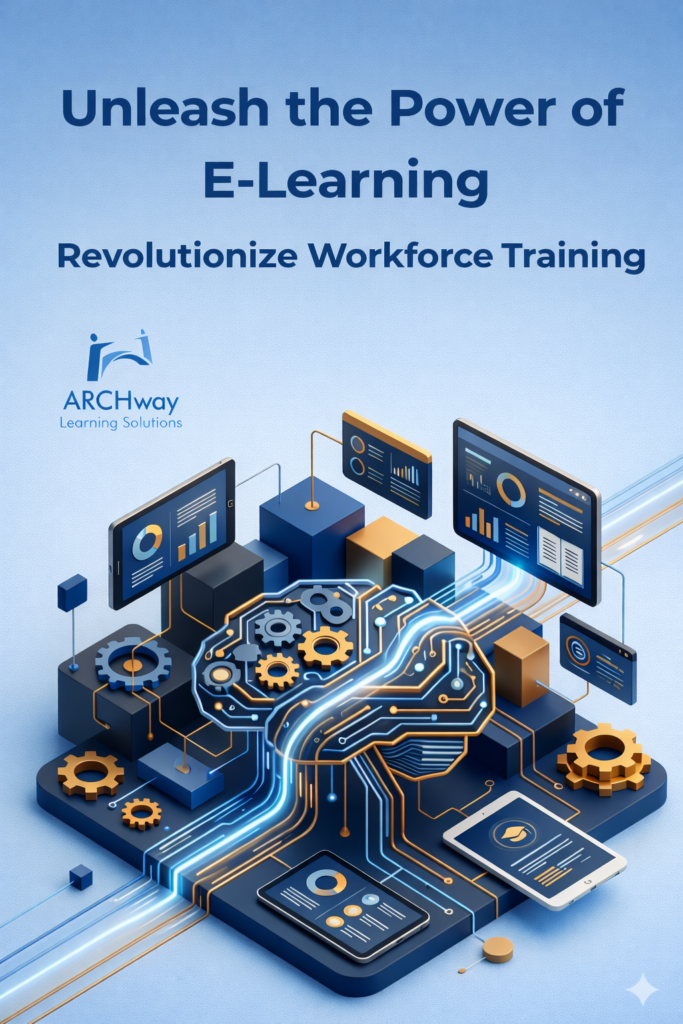
E-learning, or electronic learning, is like having a personal tutor right at your fingertips! It is the use of digital technologies and electronic media to make learning easy. It can range from simple online courses and self-paced tutorials to highly interactive simulations and virtual classrooms where participants can connect with instructors and fellow learners in real-time.
Unlike traditional face-to-face training, eLearning offers you the freedom to access content at your own pace, from anywhere with an internet connection. This can be especially useful for today’s remote and hybrid work settings. With formats like video lessons, interactive quizzes, discussion boards, and gamified activities, eLearning can cater to different learning styles and keep learners actively engaged. Plus, its digital nature allows for easy updates, ensuring that content stays fresh and relevant as industry trends and best practices change.
There are a few big reasons why e-learning is taking over. It’s super convenient and can reach a lot of people at once. Plus, it’s a lot more fun and effective than traditional learning because it uses interactive elements like videos, games, and quizzes. Let’s take a closer look.
Flexibility: Learn on Your Schedule. Unlike traditional training programs, there is no strict schedule in elearning. It allows you to access the content whenever it suits you best, whether during a lunch break, while commuting, or in the evening after work. This flexibility is particularly perfect for busy employees who try to balance work, personal commitments, and ongoing professional development.
Accessibility: Learn from Anywhere. eLearning overcomes geographical barriers, allowing learners from different locations and time zones to access the same high-quality content. With just a device and an internet connection, employees can learn from anywhere – be it the office, home, or even on the go. This is a game-changer for global companies with teams all around the world.
Personalized Learning: Learn What Matters to You. If designed well, e-learning platforms can tailor your learning experience to your specific needs. This means you’ll learn things that are relevant to your job and interests. This helps you learn faster and remember more because personalized learning experiences not only boost motivation but also result in better knowledge retention.
Cost-Effectiveness: Save Money, Get More. E-learning is a budget-friendly way to train your employees. You can save money on things like renting a space, traveling, and paying for instructors. By transitioning to eLearning, organizations can significantly cut down on these costs while still delivering high-quality training. Also, once created, eLearning modules can be reused and scaled to accommodate future training needs without any additional expenses.
Scalability: Train More People, Faster. E-learning makes it possible to train hundreds or even thousands of employees simultaneously, no matter where they are. This is perfect for companies that are growing fast or need to quickly upskill employees in response to market changes.
Improved Knowledge Retention: Learn and Remember. Research shows that interactive content, such as quizzes, scenario-based learning, and video-based instructions, leads to higher knowledge retention rates compared to passive learning methods like lectures. By actively engaging learners through multimedia and assessments, eLearning ensures that your employees not only absorb information but can also apply it effectively in their roles.
From basic, text-heavy online courses to highly interesting and interactive learning opportunities, e-learning has come a long way since its start. Early eLearning systems sometimes included little interaction and participation, with linear presentations or glorified PowerPoint slides. But technological developments have transformed the field, and so eLearning is now more dynamic, engaging, and powerful.
Using modern technologies and creative teaching strategies, eLearning nowadays offers various learning opportunities including:
Gamification – that is, including game-like elements including points, badges, and leaderboards—helps eLearning turn education into an interesting and competitive activity. This method speaks to natural drive, and makes learning enjoyable and encourages more engagement.
Virtual reality, or VR, lets employees practice skills and experience scenarios in a secure, under control environment. Industries needing hands-on training, including healthcare, manufacturing, and emergency response, where mistakes in real life could be costly or deadly, find especially great value in this.
Microlearning presents bite-sized lessons emphasizing one particular idea or ability at a time instead of long courses. This approach meets the need of the employees for clear, targeted material that fits into hectic schedules and improves knowledge retention by repeated exposure to important subjects.
Creating a successful eLearning program is not as simple as digitizing existing training materials. It requires thoughtful planning and an understanding of what makes digital learning effective. Even for small companies, partnering with experts can be invaluable, as they bring specialized knowledge and experience to the process. Expert guidance not only streamlines the design phase but also ensures the program is built to align with learning objectives and organizational goals right from the start.
Here are some key factors to consider:
Identify Your Training Needs: Start by clearly defining what you want to achieve with your eLearning program. Are you looking to onboard new employees, upskill existing staff, or provide compliance training? Knowing the particular knowledge, abilities, or behaviors you wish employees to gain will direct the delivery and content production process.
Know Your Target Audience: The success of an eLearning program depends on how well it meets the needs of its audience. Consider factors such as the learners’ job roles, existing skill levels, preferred learning styles, and access to technology. For example, field employees may benefit more from mobile-friendly courses that can be accessed on their smartphones.
Develop Content: Engaging content involves using a variety of formats – text, video, audio, and interactive elements – to cater to different learning styles. A key part of this process is weaving the company’s culture, mission, vision, values, and best practices into the learning experience, alongside stories of leadership and teammates. This creates a more personalized and relevant experience for learners. Also, using active learning techniques like real-world applications and scenario-based learning ensures employees can apply the knowledge in their daily roles, deepening their understanding and engagement.
Choose the Right Technology: It’s important to consider the right eLearning platform. The platform should support the types of content you want to deliver, provide a seamless user experience, and integrate well with your existing systems. Consider features such as content management, learner tracking, and analytics to measure the program’s effectiveness.
Making an e-learning program that works well is a very detailed process that takes a lot of planning, knowledge, and time. Experts in the field say that for every 15 minutes of eLearning, it takes about 40 hours of instructional planning and development work. The exact amount of time needed depends on how complicated the content is and how interactive the user wants to be. This includes a lot of different things, such as:
Research and content creation: Gathering information, developing instructional materials, and writing engaging scripts.
Assessment development: Designing quizzes, tests, and other evaluation methods to measure learning outcomes.
Multimedia production: Creating visuals, animations, audio recordings, and other interactive elements.
To streamline this process and ensure high-quality results, partnering with experienced e-learning professionals is strongly recommended. These experts can guide organizations through a structured e-learning design process, saving time, effort, and resources. By working closely with subject matter experts and aligning the design with organizational goals, professionals can help create e-learning programs that are accurate, engaging, and effective.
The foundation of a successful e-learning program is effective planning. It includes:
Identifying learning opportunities: Pinpointing specific areas where e-learning can address organizational needs and improve employee performance.
Defining clear learning objectives: Establishing measurable goals that align with business objectives and employee development needs.
Collaborating with stakeholders: Engaging key stakeholders to ensure that the e-learning program supports broader organizational initiatives.
Partnering with subject matter experts: Enlisting the expertise of domain specialists to guarantee the accuracy and relevance of the content.
Balancing time commitments: Carefully managing the time and resources allocated to the project to avoid delays and ensure timely completion.
Iterating through design and approval: Continuously refining the e-learning program based on feedback and evolving needs.
Conducting pilot testing: Evaluating the program with a small group of learners to identify potential issues and make improvements.
Implementing and evaluating: Rolling out the program organization-wide and measuring its effectiveness through feedback and data analysis.
Quality assurance is a critical step in the e-learning development process. A poorly designed course can lead to frustration, disengagement, and ultimately, a negative learning experience. Involving learners in the development process can provide valuable insights into usability, ensuring that the program is intuitive and easy to navigate. Thorough testing should also be conducted to identify and address any technical or content-related issues before launch. By investing time and effort into quality assurance, organizations can create e-learning programs that are both effective and enjoyable for learners.
To determine the effectiveness of your eLearning program, it’s important to measure its impact using data and analytics. This can be done through:
Setting KPIs and Tracking Progress: Establish clear Key Performance Indicators (KPIs) to track whether learning objectives are being met. This could include metrics such as course completion rates, assessment scores, and time spent on each module.
Knowledge Retention Assessments: Use quizzes and post-training evaluations to measure how well learners have retained the information.
Employee Engagement Metrics: Track metrics like completion rates, time spent, and participation in interactive elements to gauge engagement levels.
Feedback Mechanisms and Surveys: Regularly solicit feedback from learners to understand their experiences and identify areas for improvement.
Evaluating the Impact on Business Goals: Ultimately, the success of your eLearning program should be tied to tangible business outcomes, such as improved employee performance, increased sales, or reduced compliance violations.
E-learning offers a powerful solution for organizations seeking to improve employee development and drive business growth. By investing in high-quality eLearning programs, you can:
Boost employee engagement by providing flexible and interactive learning opportunities.
Enhance knowledge retention through the use of engaging content formats.
Improve productivity by equipping employees with the skills they need to succeed.
Drive innovation by fostering a culture of continuous learning.
ARCHway is a team of experts dedicated to designing and developing customized eLearning programs that meet the unique needs of your organization. Contact us today or visit www.archwaylearningsolutions.com to learn more about how we can help you revolutionize employee development.