What if one of your most expensive business problems is hiding in plain sight? Companies can usually count turnover, overtime, missed deadlines, customer complaints, and employee relations issues. What is harder to see is how many of those problems started with a manager who was handed a team before being taught how to lead one.
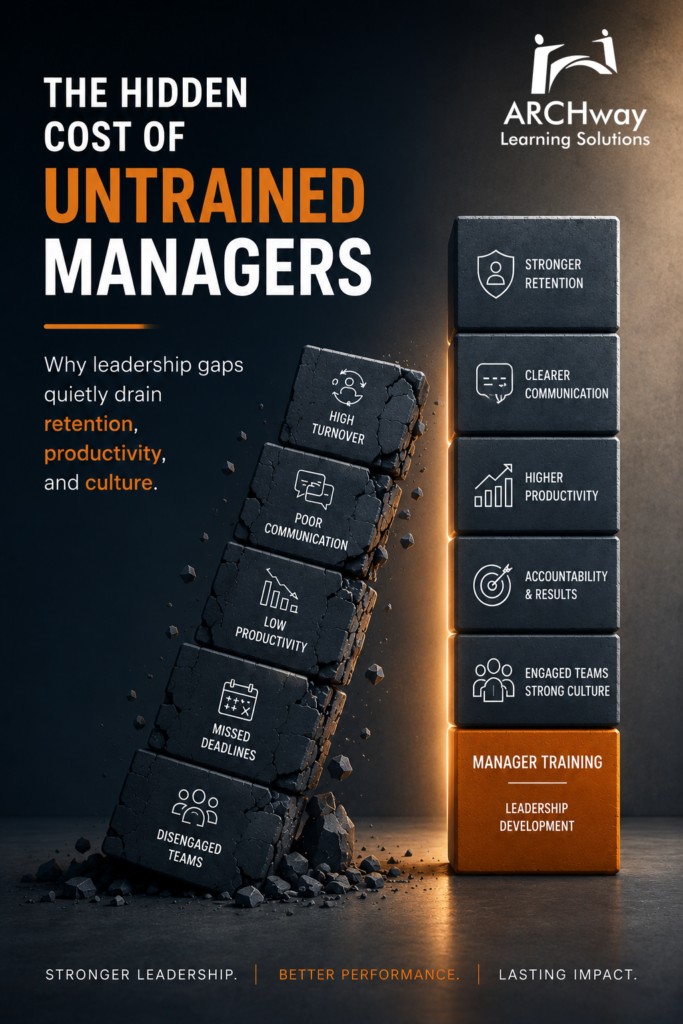
Untrained managers rarely create one dramatic failure overnight. The cost usually leaks out slowly. A strong employee checks out. A team starts walking on eggshells. Communication gets fuzzy. Performance issues sit too long. By the time leaders see the pattern, the organization has already paid for it in lost time, lost talent, and lost trust.
For CEOs, founders, HR executives, and operations leaders, this is not a soft-skills side note. It is a business performance issue. Managers are where strategy meets the workday. When they are ready, they lift the whole team. When they are left to wing it, even a strong strategy can get stuck in the weeds.
A promotion can feel like a reward, but without preparation, it can turn into a trap. Companies often promote high performers because they know the work, understand the customer, and have earned respect. That experience matters. Still, being great at the job is not the same as being ready to lead people through the job.
A skilled employee may know how to solve problems personally, but managing requires a different skill set. Managers must delegate, coach, give feedback, handle conflict, communicate expectations, document performance, support change, and build trust. Those skills are learned through intentional leadership development, not simply absorbed through a new title.
This is where organizations often set good people up to struggle. A new manager gets the title, the team, and the pressure, but not enough guidance for the people side of the role. They learn by trial and error, and the team becomes the practice field.
Everyone pays for that learning curve. The manager feels overwhelmed. Employees get mixed signals. Senior leaders step into issues that should have been handled earlier. HR becomes reactive instead of strategic. It is the classic penny wise, pound foolish mistake.
Employees may join a company because of the brand, compensation, mission, or opportunity. But they usually experience the company through their direct manager. That daily relationship shapes whether employees feel respected, clear, supported, challenged, or overlooked.
When managers are untrained, retention problems can quietly accelerate. Employees may not immediately say, “I am leaving because my manager lacks training.” Instead, they mention poor communication, lack of feedback, unfair expectations, limited growth, unresolved conflict, or feeling undervalued. Those are often symptoms of management capability gaps.
A manager who avoids difficult conversations allows frustration to grow. A manager who gives vague direction creates rework. A manager who only notices mistakes drains motivation. A manager who does not know how to coach may lose employees who wanted to grow. Over time, people do not just leave jobs; they leave daily experiences that feel harder than they need to be.
This is why manager training belongs in every serious employee retention strategy. Pay, benefits, flexibility, and career paths matter, but they cannot fully cover for poor day-to-day leadership. If the manager experience is broken, retention is already an uphill climb.
Confusion may not look dramatic, but it is expensive. When employees are unclear about priorities, timelines, ownership, or standards, productivity quietly slips. Work gets duplicated. Decisions drag. Small mistakes snowball. People spend time asking, guessing, waiting, or redoing work that should have been clear the first time.
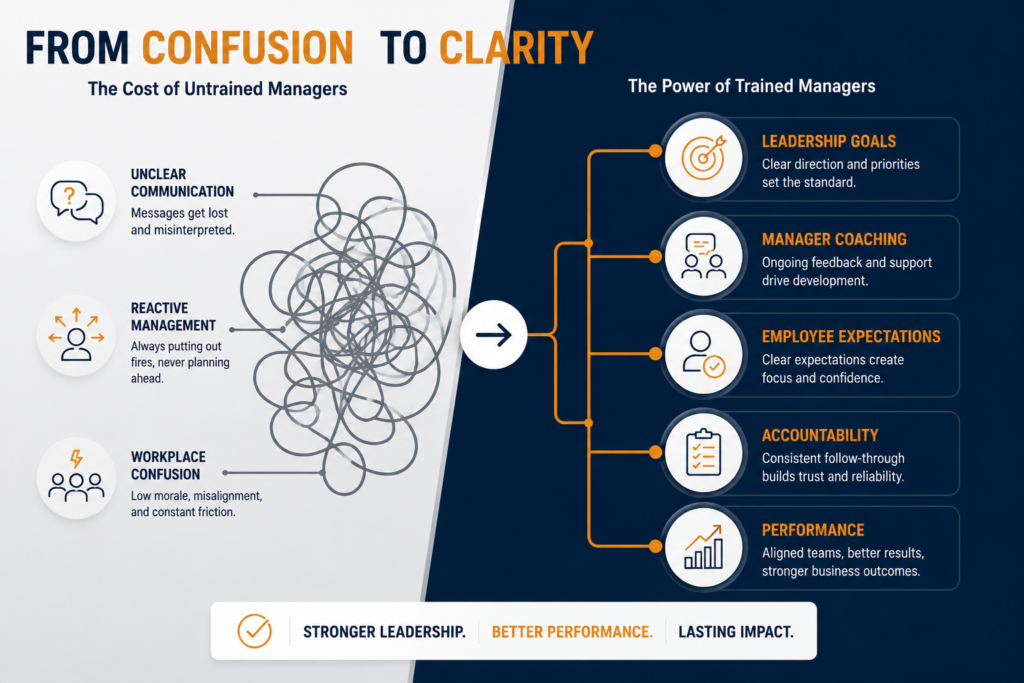
Untrained managers often communicate from their own assumptions. They may believe expectations are obvious because the work is familiar to them. They may give instructions quickly without checking for understanding. They may avoid follow-up because they do not want to micromanage. The result is a team that is busy, but not always aligned.
Strong management training helps managers communicate with clarity and consistency. It teaches them to define outcomes, set expectations, prioritize work, and create accountability without creating fear. That kind of structure does not slow people down; it helps them move faster because they know where they are going.
Culture is not just what sits on a website or shows up in an onboarding deck. It is what employees feel in meetings, feedback conversations, schedule changes, workload decisions, conflict moments, and everyday communication. In real life, culture often walks into the room as a manager.
If managers are not trained, culture becomes inconsistent. One team may feel supported while another feels ignored. One supervisor may communicate respectfully while another creates fear or confusion. One department may encourage growth while another punishes questions. Employees quickly notice the difference.
This inconsistency can weaken trust across the organization. Leaders may believe they have a strong culture because the values are clear at the top, while employees experience something different on the front line. That gap can become a credibility problem.
Manager training gives organizations a common leadership language. It helps managers understand not only what the company values, but how those values should show up in everyday behavior. That is where culture moves from a statement to a standard.
Many business problems are communication problems wearing a different hat. A missed handoff, a frustrated customer, a safety issue, a tense department relationship, or an underperforming employee can all start with unclear communication.
Managers sit in the middle of the communication chain. They translate leadership decisions into team action, and they bring team concerns back to leadership. When that middle layer is untrained, messages can become delayed, diluted, or misunderstood.
An untrained manager may pass along information without explaining context. They may avoid sharing difficult updates. They may communicate differently to different people. They may assume silence means agreement. These habits can create confusion and mistrust, especially during change.
Effective communication is not just talking more. It is knowing what to say, when to say it, how to check understanding, and how to invite useful questions. That is a skill, and like any skill, it improves with training, practice, and feedback.
Accountability can be a loaded word. In some workplaces, it sounds like punishment. In others, managers avoid it because they do not want to damage relationships. Both paths create problems.
Untrained managers may wait too long to address performance issues. They may soften the message so much that the employee does not understand the seriousness. Or they may become too harsh because they lack the tools to have a direct but respectful conversation. Either way, the issue rarely improves.
Healthy accountability starts before something goes wrong. It begins with clear expectations, fair standards, consistent follow-up, coaching, and documentation when needed. It also requires managers to separate the person from the behavior and address problems early, before frustration hardens into conflict.
When managers are trained to handle accountability well, teams become more confident. Employees know what is expected. Strong performers feel protected from carrying the weight for others. Problems are addressed before they become fires. That is good leadership, and it is also good risk management.
Every organization is building its future leadership team, either by design or by default. The habits managers learn today often become the leadership norms they carry into bigger roles tomorrow.
If early managers learn by guessing, avoiding conflict, relying only on authority, or copying inconsistent examples, those habits can spread. Over time, the organization may develop leaders who know the business technically but struggle to lead people strategically.
That creates a long-term capability gap. Succession planning becomes harder. Promotions feel riskier. Senior leaders spend more time correcting leadership behaviors that should have been developed earlier. The organization may have talent, but not enough leadership readiness.
Expert-led manager development helps build the bench before the business urgently needs it. It gives emerging leaders practical tools, shared expectations, and guided practice. Instead of hoping managers grow into the role eventually, organizations can create a path that helps them grow with intention.
DIY training usually starts with good intentions. Someone builds a slide deck, schedules a workshop, and hopes managers leave more prepared. But leadership behavior does not change just because a presentation was delivered.
Effective manager training requires more than content. It requires adult learning design, relevant scenarios, practice, discussion, coaching, reinforcement, and connection to real business goals. Managers need to apply what they learn to the situations they actually face: difficult conversations, shifting priorities, employee disengagement, cross-functional tension, and performance expectations.
This is where an expert learning and development partner can make a real difference. ARCHway Learning Solutions helps organizations move beyond one-time training events and into practical learning experiences that build capability. The goal is not to make managers sound better in theory. The goal is to help them lead better at work.
For workforce-intensive organizations, that kind of development can support retention, engagement, communication, productivity, and culture. It also sends an important message to managers: you are not expected to figure leadership out alone.
The best time to address management gaps is before they turn into turnover reports, employee relations cases, or customer service problems. Leaders can start with a few direct questions.
Have our managers been trained in coaching, feedback, communication, conflict resolution, and accountability? Do employees receive a consistent management experience across teams? Are new managers prepared before they lead people, or only after problems appear? Do our managers understand how their behavior affects retention and culture? Are we treating manager development as a business strategy or as an optional extra?
These questions can uncover the difference between having managers in place and having managers truly equipped to lead.
Management training helps managers communicate clearly, coach employees, handle conflict, build trust, and support performance. Without it, organizations often see higher turnover, weaker accountability, and inconsistent team experiences.
Untrained managers can create confusion, frustration, poor feedback, unresolved conflict, and limited growth opportunities. These daily experiences often influence whether employees stay or leave.
No. New managers need early support, but experienced managers also benefit from refreshed skills, shared leadership standards, and practical tools for today’s workplace challenges.
A strong program should include communication, coaching, feedback, accountability, conflict resolution, employee engagement, and real workplace practice. It should connect directly to business goals, not sit apart from them.
The hidden cost of untrained managers is that the organization keeps paying for the same problems in different forms. Turnover, rework, conflict, disengagement, and inconsistent execution may look separate, but they often point back to the same root: managers who were expected to lead without enough preparation.
Manager development is a smart way to protect your people, strengthen your culture, and improve business performance. If this topic connects with what your organization is seeing right now, visit www.archwaylearningsolutions.com to learn more, or contact ARCHway Learning Solutions for a strategic consultancy session.